
Half Cow vs. Quarter Cow: Which Size Should You Buy?
By Beef Near Me ·
A quarter cow (75–110 lb of beef, 4–6 cu ft of freezer) suits 1–3 beef eaters; a half (150–220 lb, 8–12 cu ft) feeds 3–5 people for 6–12 months at a lower per-pound price. Here's how to choose.
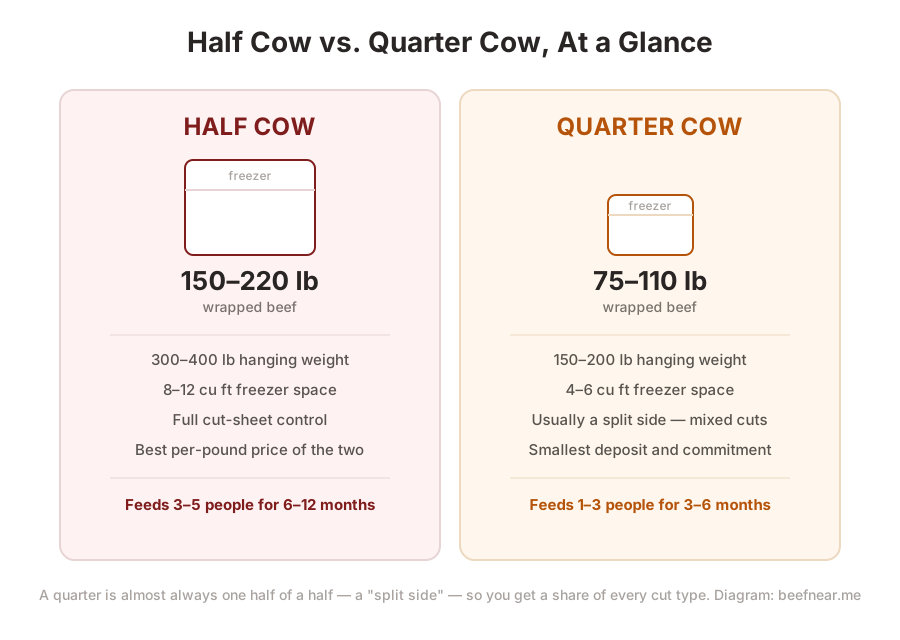
Buy a quarter if 1–3 people eat beef in your house or you're trying bulk beef for the first time; buy a half if 3 or more people eat beef regularly and you can commit 8–12 cubic feet of freezer. A half costs less per pound and gives you full cut-sheet control; a quarter is the low-commitment way in. Both beat grocery pricing for the same meat.
How Much Beef Do You Actually Get?
A quarter yields 75–110 lb of wrapped beef from roughly 150–200 lb hanging weight; a half yields 150–220 lb from 300–400 lb. A useful planning number: a quarter feeds one to three beef-eating people for 3–6 months; a half feeds a family for 6–12 months.
Is a Quarter Really Just Half of a Half?
Usually, yes — most ranchers sell quarters as split sides: the half is divided front-to-back so each quarter gets a share of chuck, rib, loin, and round. You get some of every cut type. A few ranchers sell a "front quarter" or "hind quarter" separately — front is roast- and ground-heavy, hind is steak-heavy. Ask which they mean before you order.
Which Costs Less Per Pound?
The half. Ranchers quote their best rate for halves and wholes because one buyer takes more of the animal; quarter pricing is usually $0.25–$0.75/lb hanging higher. Processing fees are the same per pound either way. The gap is real but modest — if a quarter fits your household better, the savings difference is smaller than the cost of wasted beef from an over-sized half.
What About Cut-Sheet Control?
With a half, you fill out your own cut sheet at the processor: steak thickness, roast sizes, how much becomes ground, whether you want soup bones and organ meat. With a split-side quarter you're usually sharing or following the rancher's standard cut sheet. If you have strong preferences — thick steaks, more ground, no organ meat — the half is the way to get them. See our cut sheet guide before your first order.
How Much Freezer Space Does Each Need?
A quarter needs 4–6 cubic feet (a small chest freezer, or the chest freezer you already own); a half needs 8–12. One cubic foot holds about 22 lb of wrapped beef. Full sizing guide with diagrams: how much freezer space does a half cow need?
Which Should a First-Timer Buy?
If you've never bought bulk beef, a quarter is the sane start: smaller deposit (~$50–$200 vs. $100–$400), less freezer infrastructure, and a 3–6 month trial of eating from your freezer. If you already know your family will eat it — or you're splitting with another family — go straight to the half and take the better rate. Two families can also split a whole animal at the processor, each taking a half with separate cut sheets.
How Do You Find Ranches That Sell Quarters?
Nearly every ranch that sells halves will sell quarters, but availability is seasonal — quarters sell out first because they're the entry-level product. Browse beef farms by state, call the ranches near you, and ask about split-side availability and next processing dates. Winter and spring often have shorter waits than fall. (More on timing.)